What Is a Metal Service Center and Why Does Efficiency Define the Business?
At LineSight we think about metal service centers more than most. Here is what we know.

LineSight
March 30, 2026
What Is a Metal Service Center and Why Does Efficiency Define the Business?
At LineSight AI we think about metal service centers more than most. Here is what we know.
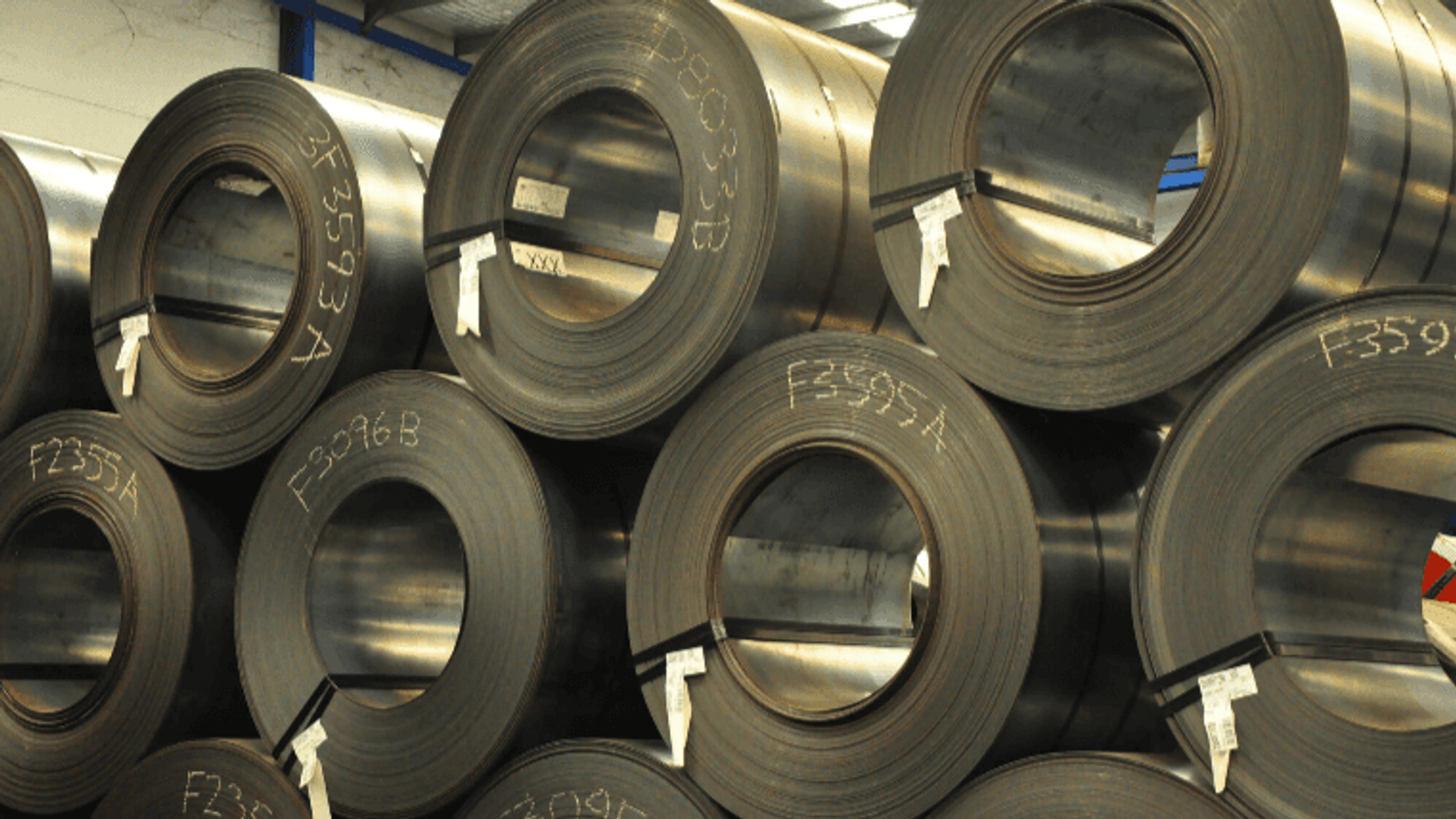
Metal service centers sit in the middle of the metal supply chain, taking raw metal from producers and transforming it into the precise formats that manufacturers actually need. The HVAC system in your building, the parts under your car hood, the refrigerator in your kitchen. All of it passed through a service center before it reached you.
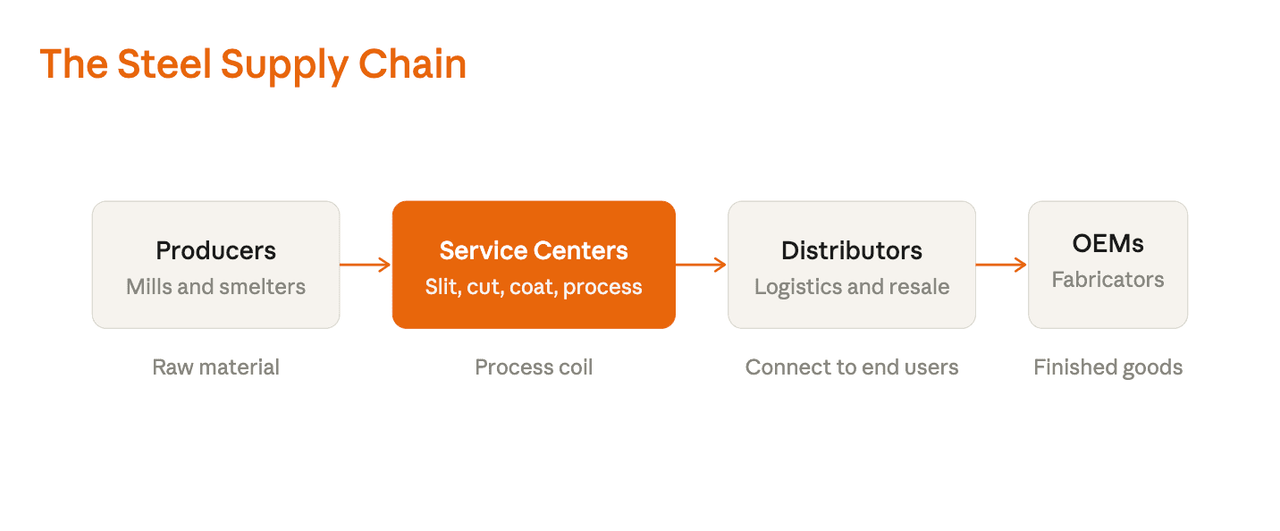
The supply chain they operate in has four interconnected layers:
Producers and Mills create metals like steel and aluminum from raw materials or scrap at massive scale. Processors and Service Centers add value by cutting, slitting, shearing, and coating that raw metal into customer-ready formats. Distributors handle logistics and serve smaller markets that mills cannot reach efficiently. OEMs and Fabricators take the processed metal and manufacture the finished goods we use every day.
Depending on their equipment and floor expertise, service centers can offer a wide range of processing capabilities including laser cutting, coil coating, and shearing. But the most universal operation across the industry is slitting: taking wide master coils and cutting them down into the specific widths customers need.
Why do service centers exist at all?
A reasonable question is why mills don't just buy equipment to cut metal themselves. The answer is variability.
End users need small quantities with precise specifications that change constantly. Gauge, width, grade, coating, delivery timing. None of it is uniform or predictable. Mills are built for volume and consistency, not customization. Which is why the supply chain evolved to need an intermediary that could absorb that complexity, hold inventory, and deliver exactly what manufacturers need exactly when they need it.
That intermediary is the metal service center. They exist because the market needs them. But the market they stepped into is one of the most unforgiving in manufacturing.
A market defined by thin margins
Metals are a commodity. In its most common forms, that means it is largely undifferentiated and pricing is a direct reflection of supply and demand. The mills set the price. The rest of the industry listens. Whatever price the mills sell at is what service centers buy at.
The market is highly cyclical by nature and policy shifts make it even more unpredictable. Tariffs, trade disputes, and global overcapacity can move prices faster than a service center can adjust its inventory position. Hot rolled coil prices rose 31% in the last 12 months alone. A service center that bought coil at last year's prices and is selling in today's market made money. One that bought at today's prices and sells into a softening market may not.
The result is critically thin margins. Margin leaks come from multiple directions at once:
- High capital expenditure on equipment and facilities.
- Buying raw material high and selling within a compressed pricing window.
- Scrap: material purchased at full price that ends up in the bin rather than on a truck to a customer.
These factors together make efficiency not just important but critical to survival.
How service centers fight for margin
To maximize efficiency service centers focus on three things: maintaining high utilization rates on expensive equipment, balancing inventory against unpredictable demand, and reducing scrap wherever possible.
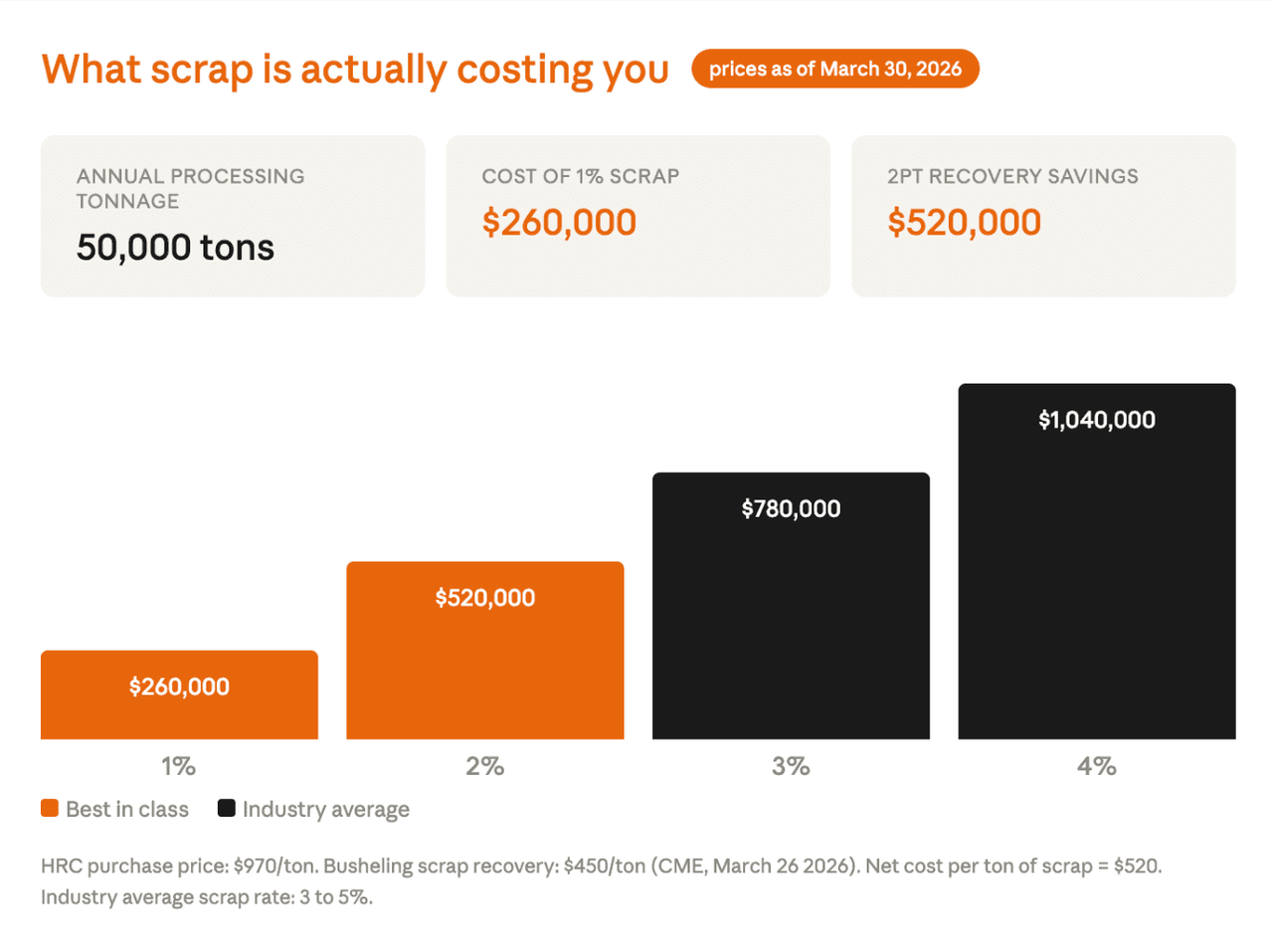
Scrap reduction is where the biggest gains live. Every coil processed generates some amount of waste including edge trim, drop cuts, and end-of-coil material that was purchased at full price and recovers only scrap value. At industry average rates of 3 to 5 percent that leak is constant and significant. At 50,000 tons per year, closing a two-point gap in scrap rate is worth over a million dollars annually.
The three most effective approaches to reducing scrap:
- Better pattern planning. Grouping similar orders together and designing cut patterns that minimize drop cuts and scrap. The limitation is bandwidth and cognitive load. A skilled scheduler can evaluate dozens of combinations manually. The optimal solution to a full day of orders may require evaluating thousands. The gap between what gets evaluated and what is actually optimal is where scrap lives.
- Edge trim minimization through knife maintenance. Dull knives generate more burr, which means more edge trim is required to produce a clean edge. A disciplined knife maintenance schedule keeps trim requirements at their minimum on every run.
- Production planning software. For most service centers tips 1 and 2 will do most of the heavy lifting. The biggest gains in scrap reduction have always come from better planning habits and disciplined equipment maintenance.
The ceiling on manual optimization is real though. At a certain point the number of combinations a scheduler has to evaluate grows faster than any human can keep up with. That is where software comes in. Tools like LineSight handle the full optimization problem automatically, freeing up schedulers to focus on the judgment calls that actually require experience.
In a market this volatile, the service centers that thrive through cycles are not the ones who timed the market perfectly. They are the ones running lean enough to make money at the bottom and protect margin at the top. Efficiency is not a strategy for good times. It is the whole game.