Facts
Pressure Points: What Metal Service Centers Are Up Against in 2026
The metal industry has always operated in an environment of thin margins and tight timelines. But right now, the forces pressurizing the sector are unusually complex. GDP growth is narrowing. A K shaped economy, a war that upended global supply chains, and a Federal Reserve in transition are each creating their own uncertainty, and right now all three are happening at once. Knowing what's driving these forces and what they mean for your operation is the difference between positioning ahead of the pressure and getting caught in it.
The Macro Picture: Growth Exists, But It Isn't Evenly Distributed
At a recent FMA webinar, economist Chris Kuehl laid out his economic outlook for 2026. GDP is holding at around 2.7% for Q1, but the composition of that growth tells a more nuanced story. The gains are heavily concentrated in data centers, power generation, and a handful of high tech sectors. Traditional manufacturing, residential construction, and consumer goods are lagging. The rest of the economy, in Kuehl's framing, is considered sluggish for now.
For fabricated metals specifically, forecasts project around 2.3% growth for 2026 and 3.4% for 2027. The challenge for growth is that the customers buying metal products are already operating in an environment where real disposable income is only growing at 0.9%, well below the 2.5% threshold Kuehl identifies as the trigger for meaningful discretionary spending. Upstream pressure flows downstream. When your customers are tightening, they squeeze their suppliers too.
Kuehl's K shaped recovery framework tells an important story for this industry: upper income households and the companies serving them are breaking profit records, while middle and lower income segments are being squeezed by inflation and stalling wages.
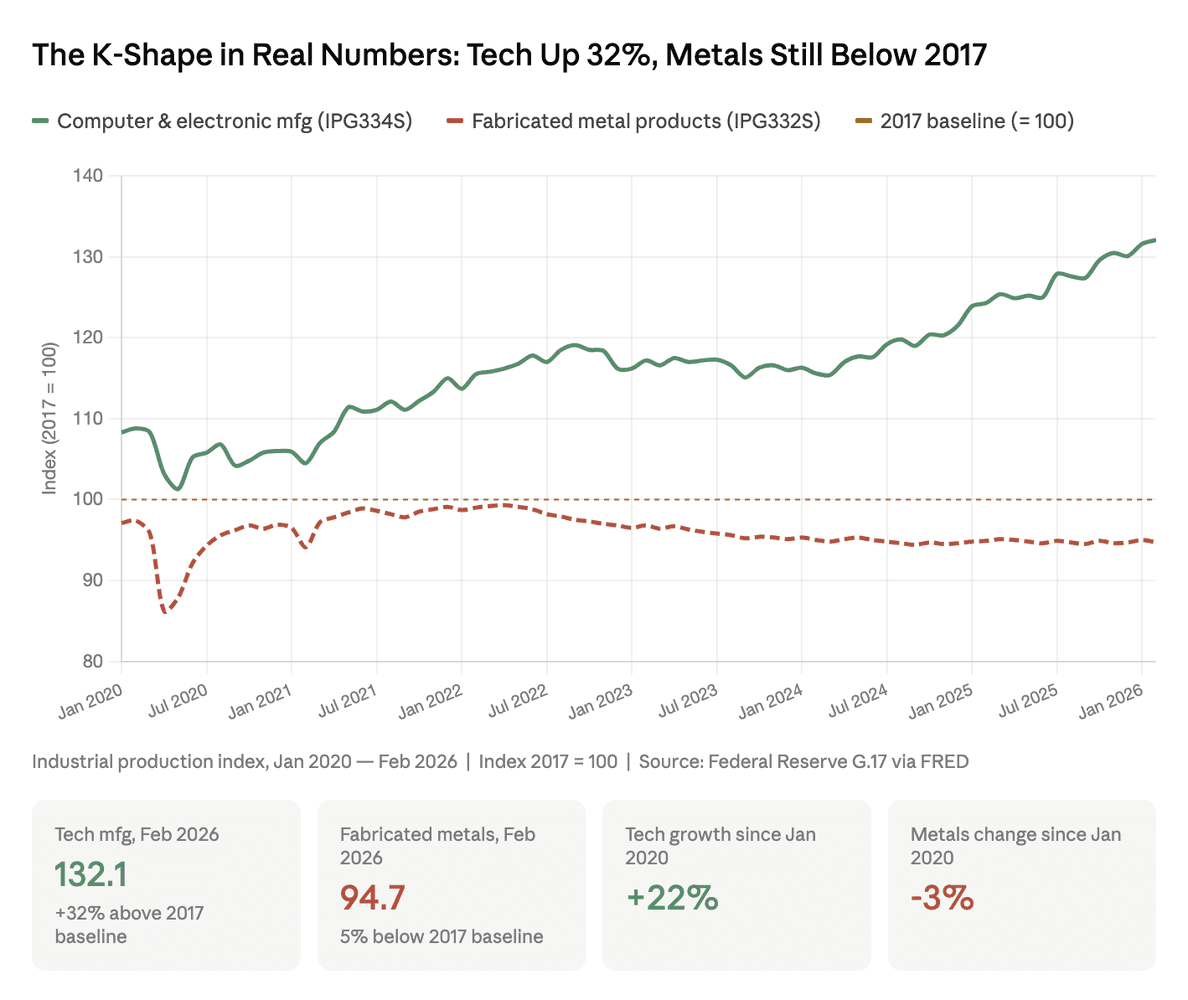
For metal service centers, which side of that split your end markets sit on determines everything right now.
The Hormuz Crisis: An Oil Story That's Actually a Steel Story
The Iran conflict and near closure of the Strait of Hormuz has done more than spike energy prices. According to the World Economic Forum, the disruption runs straight through the materials metal service centers depend on.
The Gulf is a significant supplier of high grade iron ore pellets and direct reduced iron, the premium inputs of modern steelmaking. According to the WEF report, shipowners began avoiding the Strait almost immediately after the conflict escalated, making it harder to secure vessels and prompting buyers across Asia, India and the Middle East to pause new procurement. With freight uncertainty unresolved, longer transit times and rising shipping costs are beginning to feed through to the iron industry.
Aluminium tells a similar story. The Middle East produces around 9% of global primary aluminium outside China, and supply from Gulf smelters has been constrained, with over 150,000 tonnes pulled from London Metal Exchange warehouses as the disruption took hold.
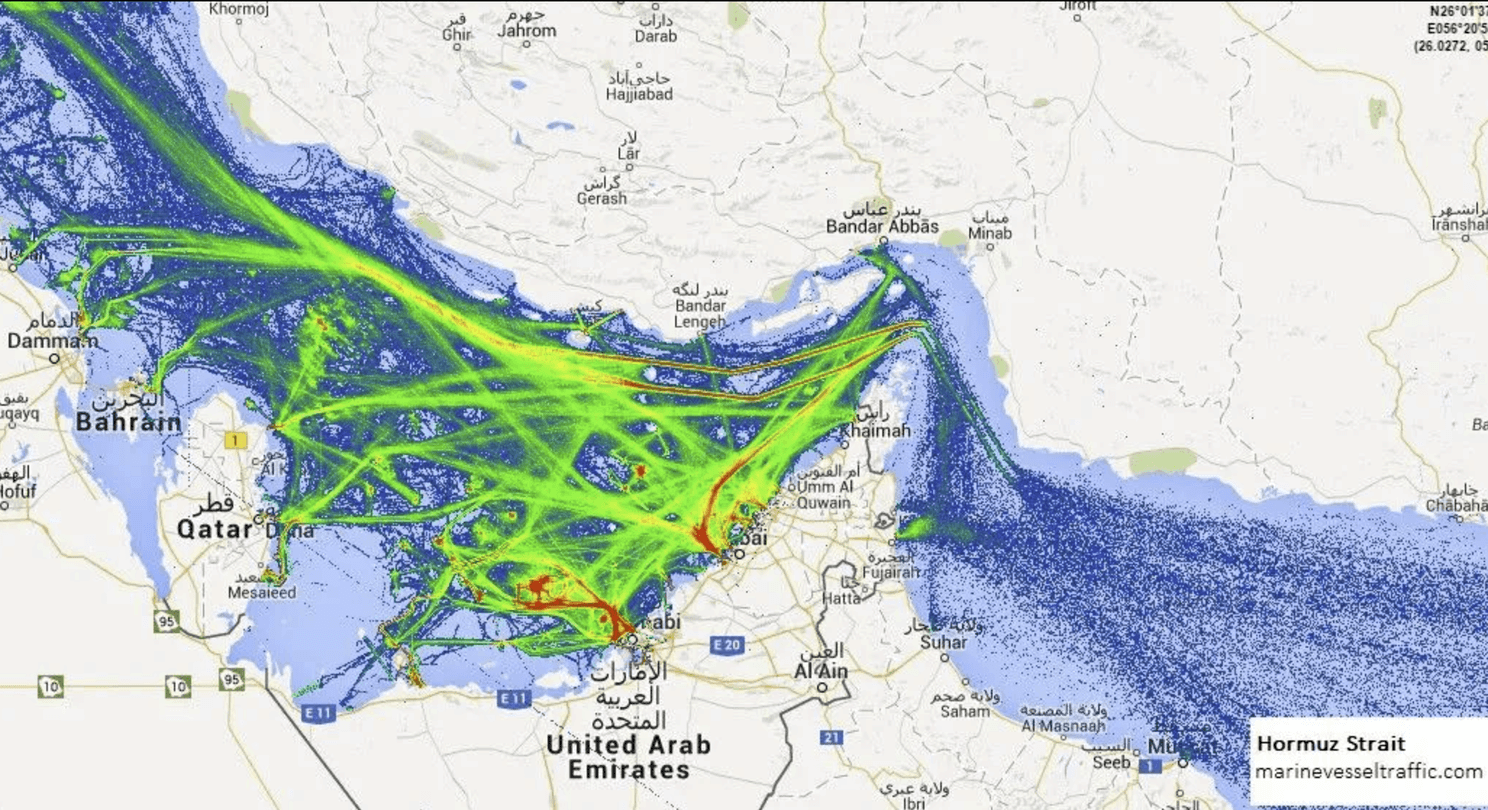
Strait of Hormuz: Every Line Is a Ship. Every Ship Is a Supply Chain
A Fed in Transition
The Fed adds another layer of uncertainty. Powell's chairmanship ends May 15, his replacement isn't confirmed yet, and nobody knows exactly who will be setting monetary policy by summer. What this means in practice is that monetary policy direction, interest rates, inflation targets, and the pace of any future cuts, is harder to read right now than it has been in years. Whether the next Fed chair decides to cut interest rates or keep them high will have direct consequences for borrowing costs, capital investment, and the broader demand environment that metal service centers operate in.
For a metal service center buying coil today, the math is uncomfortable: input costs are rising, customers are price sensitive, and the window to absorb the difference without sacrificing margin is narrow. The companies that find ways to get more out of every coil, to reduce the scrap that bleeds margin on every run, are the ones with the most room to maneuver.
This piece was written by the LineSight team. LineSight builds AI powered slitting optimization software for metal service centers. linesight-ai.com
Sources
Chris Kuehl, Armada Corporate Intelligence. "2026 Economic Outlook." FMA Webinar, March 2026. asisreports.com
Rebecca Geldard, World Economic Forum. "The Strait of Hormuz crisis affects more than just oil. Here are 9 other commodities." April 1, 2026. weforum.org/stories/2026/04/beyond-oil-lng-commodities-impacted-closure-hormuz-strait
Atlanta Federal Reserve. GDPNow Model Estimate, Q1 2026. atlantafed.org/cqer/research/gdpnow
U.S. Bureau of Economic Analysis. Real Disposable Personal Income (DSPIC96). bea.gov
Armada Corporate Intelligence. Industrial Production Forecasts: Fabricated Metal Products, Manufacturing, Automotive. March 2026. asisreports.com
Federal Reserve Board. Summary of Economic Projections, March 2026. federalreserve.gov
Board of Governors of the Federal Reserve System. Industrial Production: Computer and Electronic Product (IPG334S) and Fabricated Metal Product (IPG332S). G.17 Industrial Production and Capacity Utilization, via FRED. federalreserve.gov

LineSight